

The tech world is buzzing following the launch of the MacBook Neo. For the first time, Apple has released a laptop with an education price of $499, placing it in the crosshairs of school district budgets.
However, for a 1:1 student deployment, the "cheapest Mac" and a purpose-built student Chromebook are worlds apart. While the Neo is a sleek consumer device, CTL’s student-edition Chromebooks are built for the "backpack-and-bus" lifestyle. Here is the breakdown of why the price tag is only the beginning of the story.
1. Durability: Built to Last vs. Built to Look Good
The MacBook Neo features a beautiful aluminum unibody, but aluminum dents and glass screens shatter.
-
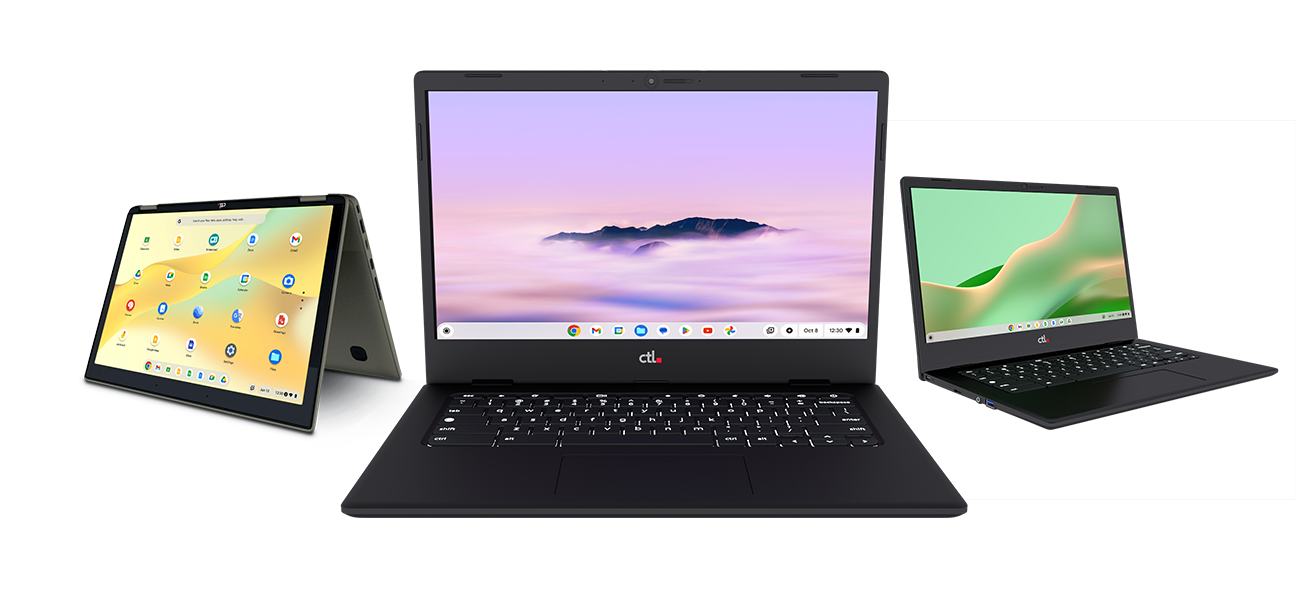
CTL’s student Chromebooks. These are engineered for, shall we say, the "active" student. They feature MIL-STD-810H tested durability, reinforced plastics, and spill-resistant keyboards. At CTL, we even drop test them at a height of 75 cm.
-
MacBook Neo. While premium, it lacks the rubber bumpers and drop-protection found on student Chromebooks. A single drop in a hallway can lead to a $300 screen repair—nearly the cost of a brand-new Chromebook.
2. The "Touch" Gap
In 2026, students expect to interact with their screens.
-
CTL student Chromebooks. Many high-volume student models include a shatter-resistant, hardened glass touchscreen. This is vital for elementary literacy apps, STEM simulations, and creative projects.
-
MacBook Neo. The Neo is non-touch, a major hurdle for intuitive learning.
3. Repairability: Self-repair vs. Apple-locked
This is the biggest hidden cost of the MacBook Neo.
-
Chromebook advantage. Chromebooks, including those manufactured by CTL, are designed for easy depot repair or self-repair. With modular components and a few screws, a district’s tech team can replace a single key on the keyboard or even a screen in a few minutes. CTL even offers a Chromebook student repair CTE course for its customers. CTL warranty and accidental damage plans do not have deductibles for repairs.
-
Neo struggle. The Neo is a "sealed box." Apple Care is available, but repairs often require shipping the device to an Apple depot or visiting a Genius Bar, leading to weeks of lost learning. Apple Care repairs may also charge deductibles.
4. OS Updates: The "Invisible" Maintenance
The way these devices handle software determines how much time teachers lose in the classroom.
-
ChromeOS. Updates install silently in the background on a dual-partition system. When a student restarts (which takes 6 seconds), they are on the latest version. There are no "Update and Restart" progress bars during class.
-
macOS Tahoe (Neo). Updates are "in-place" and intrusive. A major OS update can take 30+ minutes, effectively sidelining a student for an entire class period. Furthermore, the Neo’s 256GB drive can quickly fill up, preventing updates from even starting.
5. AI: Academic Support vs. Consumer Flair
-
Google Gemini (Chromebook). Integrated into Google Workspace, Gemini helps students summarize research, draft outlines in Docs, and organize notes. It is a productivity tool, hosted in the cloud, putting no additional load on device processing.
-
Apple Intelligence (Neo). Focused on "Genmoji" (AI emojis) and "Image Playground." While fun, these can be more distractions in a 5th-grade classroom.
6. Cybersecurity: Cloud-Native vs. Desktop OS
In an era of rising K-12 ransomware attacks, the architectural difference between these two devices is a matter of school safety. While Apple has made strides with "Apple Intelligence" privacy, the Chromebook remains the gold standard for a "zero-trust" student environment.
ChromeOS: The "Read-Only" Fortress
-
Verified boot. Every time a CTL Chromebook turns on, it checks itself for tampering. If the OS has been modified by a virus, it simply reverts to a known-good version. It is virtually "un-hackable" by traditional student-level malware.
-
Sandboxing. Each tab and app on a Chromebook runs in its own "sealed box." If a student clicks a malicious link in one tab, the rest of the system remains untouched.
-
Zero local data. Because student work lives in the cloud, a stolen CTL device contains zero sensitive student data. IT can "de-provision" the device in one click, turning it into a useless plastic brick for the thief.
MacBook Neo: The Full Desktop Target
-
The "Local" vulnerability. The Neo runs macOS Tahoe, a full desktop operating system. It allows for local file storage and executable software (.dmg files). This creates a "local attack surface" where malware can hide in a student’s Downloads folder.
-
FileVault vs. Cloud-Native. While Apple uses FileVault to encrypt hard drives, the data is still on the device. If a student’s password is compromised, their entire local digital life—from saved passwords to private photos—is accessible.
-
Update lag. Cybersecurity is only as good as the latest patch. Because MacBook Neo updates are intrusive (taking 30+ minutes), students often "Ignore" or "Postpone" critical security patches. CTL’s Chromebook devices update in the background, ensuring 100% of your fleet is protected 100% of the time.
Google Workspace: Native Integration vs. Browser-Based Friction
For districts that run on Google Workspace for Education, the device is the gateway to the classroom. While the MacBook Neo can access Google tools, there is a fundamental difference between running a web app and being built for one.
The "Native" Experience on CTL Chromebooks
-
Instant productivity. On a CTL Chromebook, Google Workspace is the operating system. Students don’t "open a browser" to get to work; their files, Drive, and Classroom are integrated into the desktop shelf and search bar.
-
System-wide Gemini AI. Google’s Gemini AI is baked into the ChromeOS interface. Students can highlight text on any website or PDF and ask Gemini to summarize it or explain a concept without ever leaving their active window.
The "Browser" Experience on MacBook Neo
-
The integration gap. On the Neo, Google Workspace is just another set of tabs in Safari or Chrome. It lacks system-level integration. For example, macOS "Spotlight" search won't natively find a specific sentence inside a Google Doc as deeply or quickly as a Chromebook’s launcher.
-
Management overhead. To make Google Workspace work "well" on a Mac, IT must install Chrome, set up extensions via MDM, and manage local file syncing. This creates more "moving parts" that can break, leading to more help-desk tickets.
-
Conflicting ecosystems. The Neo pushes students toward Apple’s iCloud, Pages, and Keynote applications. In a Google-centric district, this creates "file friction" where students can submit files that teachers can't easily open or grade in Google Classroom.
iPhone Mirroring
A flagship feature of macOS Tahoe is "iPhone Mirroring." In a classroom, this is a major distraction. Managing a fleet where students are tempted to mirror their personal phones to their school laptops is an unnecessary headache for teachers.
The "Total Cost of Ownership" (TCO) Verdict
|
Feature |
CTL Student Chromebook |
MacBook Neo |
|
Upfront Price |
$249 - $349 |
$499 |
|
Management License |
One-time ($38) from Google |
Annual MDM Subscription ($15-$30/yr), 3rd party |
|
Repair Cost (Screen) |
~$50 (In-house) |
~$250+ (Depot) |
|
Drop Protection |
Integrated |
Requires $70+ Case |
The bottom time: The MacBook Neo is a status symbol; the CTL Chromebook is a rugged learning tool for students. For the price of a MacBook Neo, a district can deploy up to twice as many Chromebooks.
When it comes to 1:1 student devices, the choice isn't just about the logo—it's about keeping students connected and learning every single day.
This article focused on the comparison with student Chromebooks. In our next article, we’ll dive in to how the MacBook Neo stacks up against the Chromebook Plus.